On this page
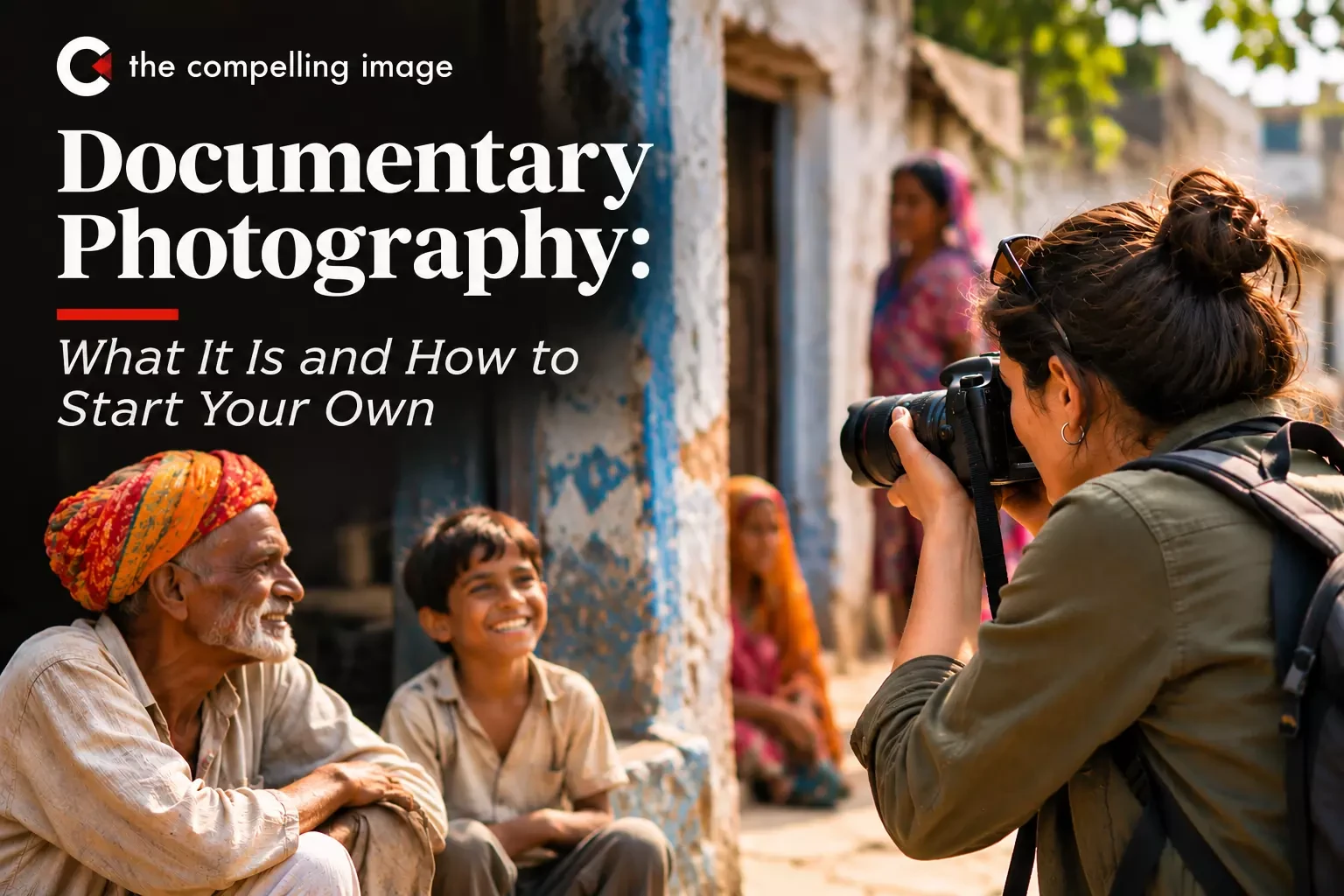
Documentary photography is the act of photographing real people, real places, and real events as they are, often over a period of time, with the intention of telling the truth about the subject. The outcome should be a genuine visual record that people can rely on to show what was actually there rather than a staged scene. A bit of editing (exposure, contrast, color, a sensible crop) is acceptable, as long as the moment itself is not altered.
That’s the short version. The longer version is a bit more complicated, really, as the term is used in a whole variety of ways, from a photojournalist covering a flood to a wedding photographer who just doesn’t pose anyone.. It’s worth defining precisely what we mean by documentary before we go on to consider how you’d actually go about doing it yourself.
What makes a photograph 'documentary'?
A few things actually and none of them have anything to do with the camera.
The first is honesty. A documentary photograph is a record of what was there. You can choose your vantage point and your moment to press the shutter (every photographer does), but you don’t move people around, you don’t ask someone to do that thing again for the light, and you don’t go in and add or take anything away afterward in the edit.
Adjusting exposure, adjusting contrast, correcting color, tightening the crop are all just normal processing and don’t in any way alter what actually happened. If you start to rearrange the scene or to alter what’s in it then it may still be a good picture, but it’s no longer a document.
The second is intent. Documentary work is generally trying to show you something about the world that you either don’t know or haven’t looked at in any great depth. It’s about people’s lives, people’s work, what a place is going through. There’s often a point of view, and that point of view can be very strong.
The third is time. A single good frame can be documentary, but most documentary work is built up over weeks, months or indeed years of returning to the same subject.
Documentary vs street photography vs photojournalism
People tend to confuse these three all the time and there is certainly a lot of overlap.
Street photography generally begins with chance. You go out into the streets and react to what’s happening, the subject often being the moment itself (a gesture, a shadow, two people just lining up in the frame). A lot of street photographers will do work on a long-term theme (e.g. a particular area over a number of years), but the individual images are still generally going to be the result of what the street presents you with rather than a subject that you’ve arranged access to. If you’re new to that, then our beginner’s guide to street photography covers the practical basics.
Photojournalism is tied to news. A photojournalist is generally working on a specific event for a publication, under a deadline, and the job is to tell the reader what happened, quickly and accurately.
Documentary sits in a kind of middle ground. You typically start with a subject (a community, an issue, a way of life) and then spend long enough with it to actually understand it. That often means getting to know the people involved and going to places you’d need permission to go. A lot of photographers do all three at various times, and a single image can quite easily fall into more than one category, so don’t get too fixated on the labels.
Types of documentary photography
There’s no official list, though you’ll come across a few broad categories.
Social documentary is probably what most people think of. It’s about looking at the way people live, their work, poverty, migration, etc., and often with a view to effecting some change.
Long-form or personal documentary is where you’re essentially following one subject over a long period of time, often something very much to do with your own life and your own world, such as your own family or your own neighborhood.
Then there’s documentary-style commercial work. Wedding and family photographers will often describe themselves as documentary, which just means they’re photographing the day as it happens rather than directing it. Same approach, very different purpose.
Portrait work also crosses over. Doing portraits of people in the places where they live and work (the classic environmental portrait) is often part of a wider documentary project.
A few photographers worth looking up
You’ll learn far more by looking at the people who actually shaped the genre than you will from any list of tips, so here are four from the early days, all of which are easy to find in museum and library collections.
Jacob Riis photographed the slums and tenements of New York City (where a large proportion of the poor were immigrants) and published How the Other Half Lives in 1890. He was among the early photographers to use flash powder to take photographs inside the buildings, enabling middle-class readers to actually see the rooms they’d only ever heard about.
Lewis Hine started working for the National Child Labor Committee in 1908 and did a lot of work photographing children at work in the mills, the mines, the canneries, the glass factories and the street trades. He did the Empire State Building construction work in 1930 and 1931, and those pictures were published in 1932 as Men at Work.
Dorothea Lange took Migrant Mother in March 1936 in Nipomo, California, while working for the Resettlement Administration (it became the Farm Security Administration the following year). The woman in the photograph is Florence Owens Thompson.
Walker Evans was with the same government photography project from 1935 to 1937. He worked with the writer James Agee on the documentation of sharecropper families in Hale County, Alabama, and the resultant book Let Us Now Praise Famous Men was published in 1941.
How do you go about starting a documentary project?
Pick something right on your doorstep. That’s actually the single most useful bit of advice you could possibly get, and it’s the one that beginners tend to disregard because they think that documentary has to be about someplace distant. It doesn’t. A subject you can get to every week (a market, a boxing gym, a family business, your granny’s street) is going to produce far better work than a trip you can only make once.
Then there’s access. You’ve got to get people to let you in, and that generally means explaining what you’re doing in a straightforward way without any attempt to oversell it. Show them some of your pictures. Come back when you said you would. Trust is earned slowly and can be lost in the space of an afternoon.
Go back and keep going back. The first few visits are invariably going to produce the ‘obvious’ pictures as that’s all you can see when you’re visiting a place for the first time and have no idea what you’re looking at. It’s only later on, once people have stopped noticing the camera and you’ve actually got a working understanding of how things actually run, that the better pictures start to appear.
Keep it simple, really. One body and one lens that you’re comfortable with is more than sufficient, and that way you’re just watching what’s going on rather than thinking about the kit. A 35mm or 28mm is a common choice as it allows you to get in close and still show the room around the subject, and the normal rules of composition still apply even when you can’t control the scene. Turn on the silent shutter if your camera has it, don’t turn on the flash for indoor work unless you really need it (it has a massive effect on people’s behavior the moment you do), and be prepared to crank the ISO right up in the dimly lit kitchens and workshops rather than risk missing the shot.
Write it all down. Names, dates, places, what was going on. Documentary pictures depend on accurate captions, and you won’t remember the details six months down the line, will you?
Don’t direct. If for some reason you absolutely have to set something up (e.g. for a portrait), then just be very clear about it in the caption.
Where beginners usually go wrong
Going out and looking for hardship somewhere else is a massive one. There’s a long and rather unflattering history of photographers going into the poorer communities, taking the dramatic pictures and then just leaving. The people who are photographed in that scenario rarely get much out of it. Starting with your own environment avoids a lot of that.
Only photographing the dramatic stuff is another. A project on a fishing harbor that’s all about the storms and the nets coming in is going to miss the point completely. The real substance of the job is the waiting about, the tea breaks, the paperwork. The quiet pictures are often what make the dramatic ones work.
Then there’s just not giving it enough time. On each visit you do get to know the place a little better, people get a little more used to you, and you start to see what’s worth waiting for, so the pictures do tend to get better as you carry on. The problem is the early pictures can be quite disappointing, and that’s precisely when so many people decide to call it a day.
And finally, heavy editing. Strong presets, big HDR looks, swapped skies — all of that will make the viewer wonder what else has been changed. Keep the processing honest and fairly restrained, and the work will be trusted.
Ethics and trust
This is the part that separates documentary from just taking pictures of people.
You’re often photographing people at a very difficult time or people who have very little agency over how they’re being presented. It’s therefore important to ask yourself fairly regularly: have they agreed to this, and do they understand where these pictures might end up? Would they recognize themselves in the way you’re showing them? Who is the work actually benefiting?
Consent isn’t something you get once and then you’re all set. It’s an ongoing dialogue. That’s particularly important when you’re dealing with vulnerable people or sensitive situations (illness, bereavement, addiction, someone in a crisis, etc.). The person who gave their consent last month may well have changed their mind since then, or may not have fully appreciated at the time that the images could be published. You have to keep checking in, you have to explain what you’re going to do with the images, and you have to be prepared to leave a picture out if someone asks you to, even if it’s a really good one.
There aren’t always straightforward answers to these questions, and photographers will disagree on them all the time. The street photography ethics guide goes into consent and the public-space aspects in much more detail, and a lot of that applies.
When does a series of pictures become a documentary project?
It usually happens when you stop thinking about individual frames and start thinking about what the pictures as a whole are saying. That means editing hard, cutting out the good images that don’t quite fit and then putting the rest in an order that makes sense to the viewer. Our guide to visual storytelling in photography goes into how that sequencing works.
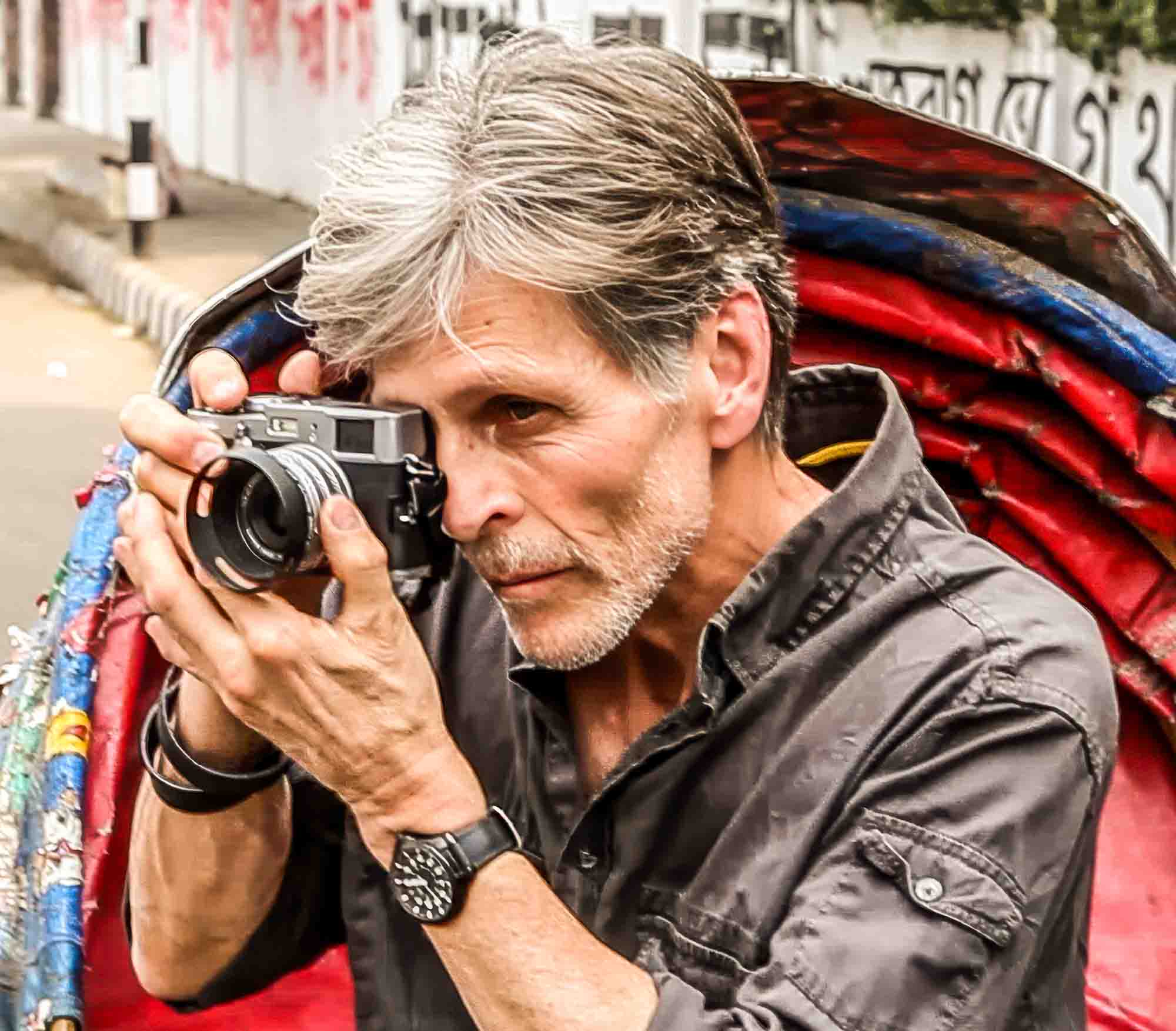
It’s also the point where a lot of people give up, because it’s genuinely difficult to keep a project going over months. The Compelling Image was founded by David Bathgate, who is a documentary photographer and anthropologist whose work has taken him to Afghanistan, India, Bangladesh and Europe. That kind of long-term engagement is what The Artist’s Lens is all about: finding a subject that is important to you, getting deeply involved with it, and keeping it going for long enough for it to become something of substance.