On this page
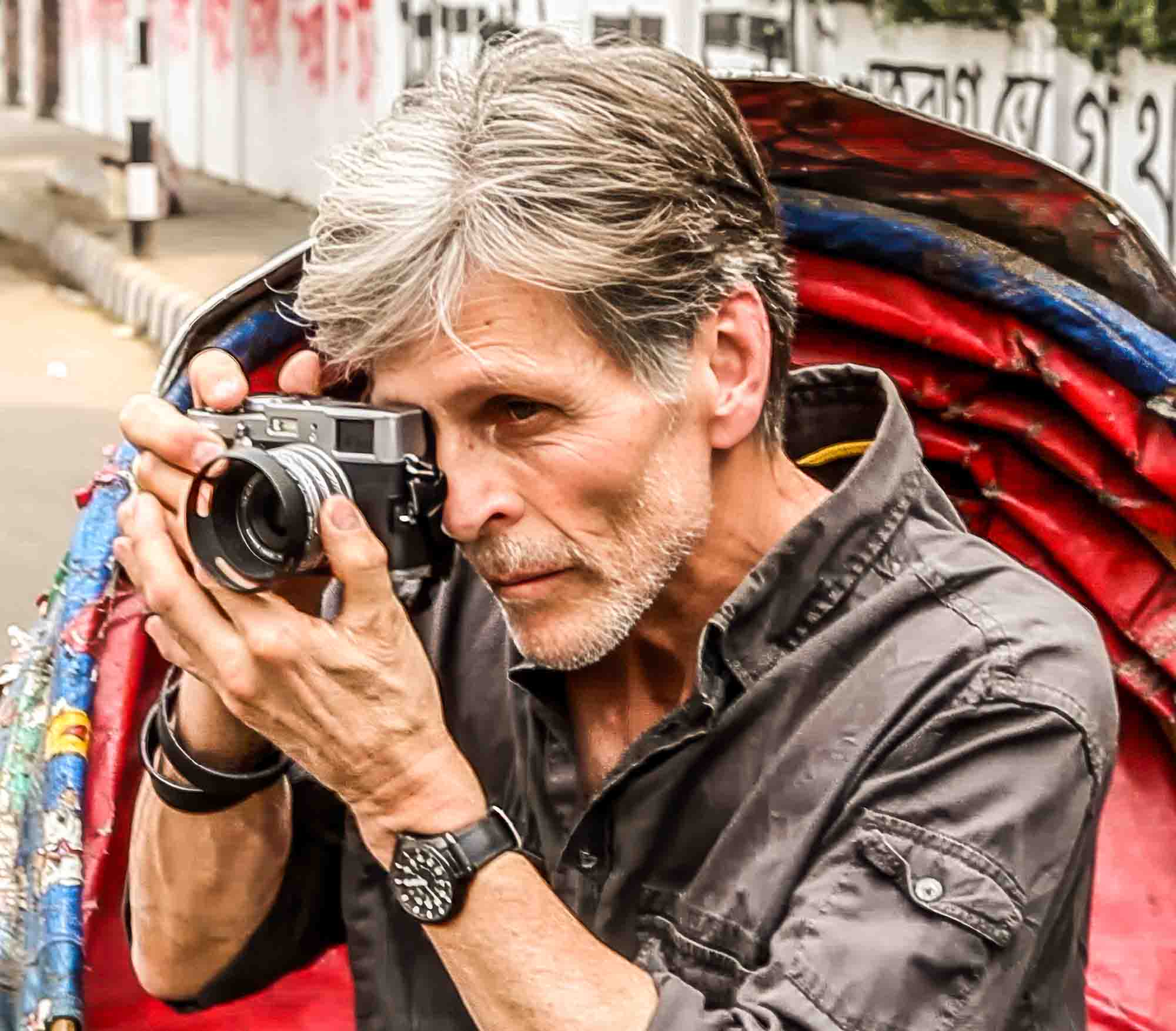
By David Bathgate, Founder of The Compelling Image
I want to tell you about a mistake I made in a crowded market in Old Delhi about fifteen years ago.
The air was thick with the smell of fried parathas and diesel exhaust. The light was filtering through the overhead tarps in these long, golden shafts. I saw a man—a laborer, probably in his seventies—taking a break. He was leaning against a stack of burlap sacks, his face a map of a very hard life. It was a "perfect" shot.
I didn't say a word. I didn't even make eye contact. I just raised my Leica, snapped three frames, and started to walk away.
He didn't yell. He didn't get angry. He just looked at me with this expression of pure, quiet disappointment. It was as if he was saying, "Oh, I’m just an object to you? A piece of scenery?"
That look haunted me for the rest of the trip. It’s the reason I’m writing this today.
When my students come to me for the Fearless Faces workshop, they usually want to talk about shutter speeds or how to "steal" a shot without getting caught. But the real work—the hard work—is the ethics. It’s about how you carry yourself in someone else’s space. If you feel "creepy" when you’re out shooting, it’s usually because you’re acting like a predator instead of a guest.
1. The "Predator" vs. The "Guest"
Let’s get one thing straight: if you are hiding behind a telephone pole with a 200mm zoom lens, trying to "snipe" people from across the street, you are being creepy.
I see beginners do this all the time. They’re terrified of being noticed, so they try to stay as far away as possible. But here’s the irony: the further away you are, the more suspicious you look. People have a sixth sense for being watched. If they see a stranger lurking in the shadows with a long lens, their internal alarm goes off.
In my own work, I do the opposite. I get close. I use a 35mm lens, which means I have to be within five or six feet of my subject. I don't hide my camera. I wear it openly. I walk slowly. I make it obvious that I am a photographer.
When you act like a guest in a space, people treat you like one. When you act like a spy, they treat you like a threat. It’s that simple.
2. To Ask or Not to Ask? (The Eternal Struggle)
This is the question that keeps every street photographer up at night.
If you ask for permission, the "moment" is dead. The person stops what they’re doing, they fix their hair, they stand up straight, and they give you a forced smile. The honesty of the scene is gone.
But if you don't ask, you feel like you’re taking something that doesn't belong to you.
Here is how I handle it: I look for the "Nod."
If I see a scene developing, I’ll linger in the area. I’ll let the person get used to my presence. I’m not just jumping in and out. I’m becoming part of the furniture. Often, I’ll make eye contact and just give a tiny, respectful nod. If they nod back or just go back to their business, that’s my "green light." They’ve acknowledged me, and they’re okay with me being there.
If they look away or turn their shoulder? I move on. No shot is worth making someone feel like they’re being hunted.
3. The "Punching Up" Rule
I’ve spent a lot of my life in places where people have very little. I’ve shot in slums, in war zones, and in refugee camps. And I’ve developed a very strict rule for myself that I drill into every student I mentor: Never punch down.
What does that mean? It means you don't use your expensive camera to mock or exploit people who are in a position of vulnerability.
I see a lot of "street photography" that is just photos of homeless people or people having a mental health crisis. To me, that isn't art. It’s exploitation. You’re taking someone’s worst day and turning it into a "cool" black-and-white photo for your Instagram.
Ask yourself this: If this person were my father, or my sister, would I want this photo published?
I want my photos to be a celebration of the human spirit. I want to find the dignity in the chaos. If a photo makes someone look small or pathetic just for the sake of "drama," I won't click the shutter.
4. The "Hanoi Incident": Dealing with Confrontation
Even if you’re the most respectful photographer in the world, someone is eventually going to get upset.
A few years back, I was shooting in a narrow alley in Hanoi. I took a photo of a man working in a small metal shop. He immediately stood up, pointed at me, and started shouting in Vietnamese. He was furious.
My heart started racing. My first instinct—the same instinct you probably have—was to apologize and run away as fast as possible.
But I didn't. I walked toward him.
I lowered my camera, I put my hand over my heart (a universal sign of respect), and I smiled. I didn't speak the language, but I pointed to my camera and then to him, and I gave him a thumbs up. I showed him the back of the screen.
His face changed instantly. He realized I wasn't a government official or someone looking for trouble; I was just a guy who thought his work was interesting. He ended up inviting me in for tea.
The lesson? Confrontation usually comes from fear. If you can replace their fear with your respect, the situation dissolves. And if they still want the photo deleted? Delete it. It’s just a file. Your reputation and your peace of mind are worth more than one frame.
5. The "Creepy" Factor is in Your Head
Here is a hard truth I’ve learned after thirty years: most of the "creepiness" you feel is just your own ego.
You think everyone is looking at you. You think everyone is judging you. You think you’re the center of the universe.
But on a busy street, you’re just another person. People are worried about their jobs, their kids, what they’re having for dinner. They aren't thinking about the guy with the Fuji camera on the corner.
When you stop worrying about yourself and start actually looking at the world, the fear goes away. You start to see the light, the shadows, the way a mother holds her child’s hand, the way a businessman sighs when he thinks no one is looking. That’s the good stuff. That’s why we do this.
6. The Bridge: Why You Need a Mentor
You can read this blog and feel inspired, but the second you step out onto a real street in a real city, that old fear is going to come back. I know, because I felt it for the first five years of my career.
This is why I don't just sell "tips." I sell a process.
In my Fearless Faces workshop, I don't just tell you to "be brave." I give you a series of escalating assignments designed to desensitize you to that fear. We start small, and we build up.
But the most important part? The feedback.
When you send me your photos, I’m not just looking at your focus. I’m looking at your timing. I’m looking at your distance. I can tell just by looking at a photo if you were "hiding" or if you were "present." I’ll show you how to close that gap. I’ll show you how to move through a crowd like a ghost—visible, but ignored.
7. Let's Master the Street Together
If you’ve ever seen a moment—a perfect, fleeting slice of life—and failed to take the shot because you were too nervous, I want to help you fix that.
My Fearless Faces course is an intensive, 4-week deep dive into the heart of street photography.
- The "Invisible" Technique: I’ll show you exactly how I hold my camera and move my body to stay discreet without being sneaky.
- The Art of the Approach: I’ll give you the exact words I use to turn a "No" into a "Yes" when I want a street portrait.
- Video Critiques: This is where the real growth happens. You’ll get my eyes on your work, helping you find the story in the chaos.
The street is the greatest theater in the world, and the show is free. You just have to be brave enough to watch.
Enroll in Fearless Faces – Stop Being a Tourist, Start Being a Storyteller
My Final Thought: Ethics isn't a set of rules you memorize. It’s a feeling in your gut. If you’re shooting with love and respect for the people in your frame, it shows. If you’re shooting with ego and a desire to "take," that shows too.
Choose respect. Every single time.
I’ll see you out there.