
On this page
I've spent decades traversing the globe as a photojournalist, from the dusty streets of Afghanistan to the misty mountains of Switzerland, and I can tell you with absolute certainty – some of my most compelling images were captured when most photographers had packed away their gear due to "bad weather."
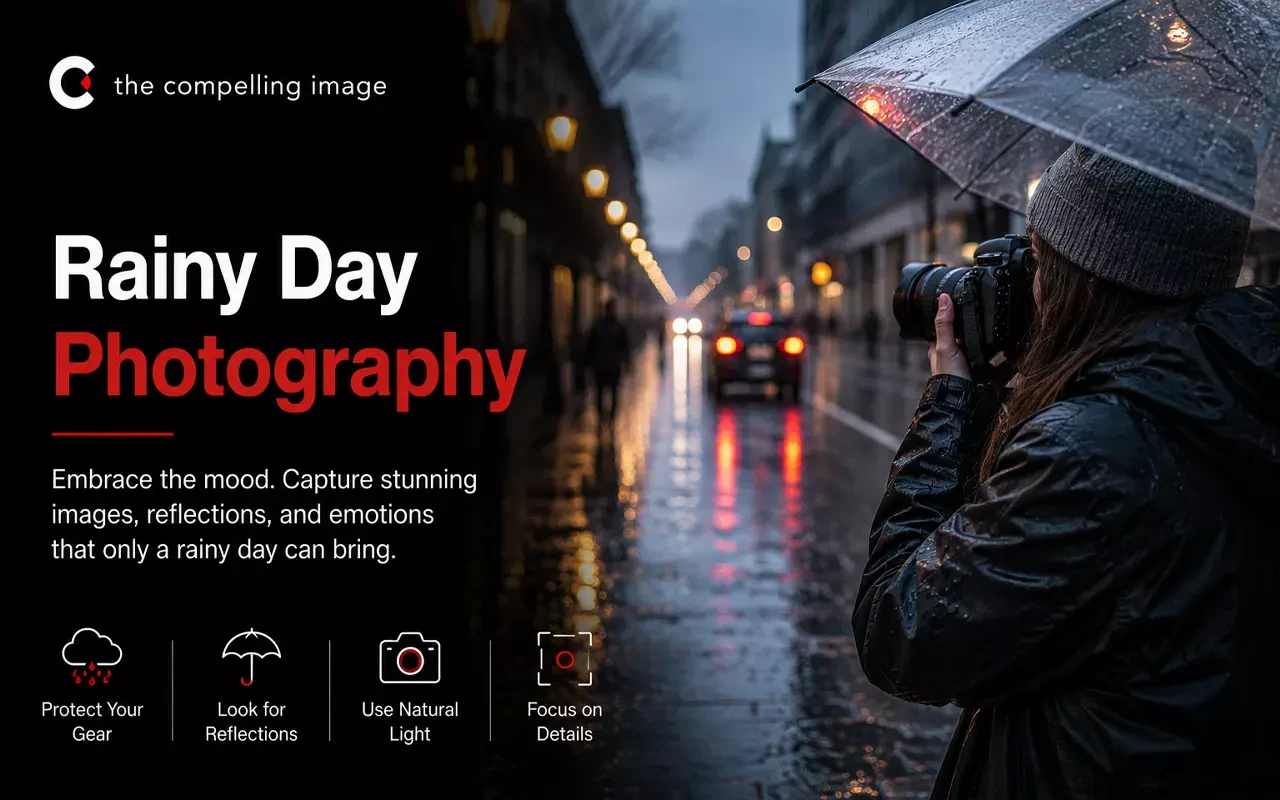
Rain isn't the enemy of photography; it's an ally offering unique opportunities for those willing to brave a little discomfort. In my online photography courses at The Compelling Image, I often challenge students to shoot in conditions they'd usually avoid. The results? Consistently surprising and often spectacular.
Essential Gear for Rainy Day Photography
After ruining an expensive lens in a sudden Bangkok monsoon early in my career, I learned the hard way about proper rain protection. You don't need fancy equipment, but you do need to be prepared.
My field kit always includes the following:
- A simple rain sleeve (buy affordable ones under $20)
- A microfiber cloth tucked in a ziplock bag to keep it dry
- A lens hood (not just for sun flare—it's excellent at preventing raindrops on your glass)
- A small towel in my bag's outer pocket for quick wipes
When teaching my "Capturing Creative Adventure Photographs" course, I emphasize that preparation enables creativity. You can't focus on composition when you're panicking about your equipment getting soaked.
For longer shoots, I wear quick-dry hiking pants and waterproof boots. After spending hours documenting monsoon flooding in Bangladesh, I can assure you that personal comfort matters tremendously for maintaining creative focus.
Camera Settings and Techniques
Rain demands specific technical approaches that I've refined through years of field experience:
Shutter Speed: This is your creative control with rainfall. Want those dramatic streaks of rain? Try 1/15s to 1/60s. Need to freeze individual droplets? Push to 1/500s or faster. I typically start around 1/125s and adjust based on the effect I'm after.
Aperture: The low light of rainy days often tempts photographers to shoot wide open, but be careful. If you're capturing reflections in puddles, stopping down to f/8 gives you the depth of field needed for sharp details. When shooting portraits in the rain, however, f/2.8 can create a beautiful separation between your subject and the falling droplets.
ISO: Don't fear pushing your ISO on modern cameras. In my photojournalism work, I'd rather have a slightly grainy image than miss the moment entirely. Start at ISO 400 and adjust as needed. Many of my published images from dimly lit rainy scenes were shot at ISO 1600 or higher.
Focus: Rain can confuse autofocus systems. I often switch to back-button focusing, which allows me to focus on my subject before recomposing. In particularly challenging conditions, manual focus with focus peaking (if your camera offers it) can be more reliable.
Creative Composition Ideas
Rain transforms ordinary scenes into extraordinary visual opportunities:
Reflections become your secret weapon. I've spent countless hours photographing upside-down worlds in puddles—from the architectural wonders of Istanbul to the neon signs of Tokyo. Get low and include both the subject and its reflection for a balanced composition.
During a documentary project in London, I captured a businessman walking past a puddle that reflected the historic buildings above. That single image conveyed more about the juxtaposition of old and new London than dozens of "sunny day" shots could have.
Macro opportunities abound during rainfall. A single raindrop on a leaf can act as a natural lens, creating miniature worlds. When teaching my "Beyond the Click" course, I demonstrated how extension tubes with a standard lens can capture these tiny universes without expensive macro equipment.
Backlighting rain creates pure magic. Position yourself with a light source behind the rainfall, and ordinary drops transform into streaks of silver. This technique works brilliantly during the blue hour when streetlights begin to glow against the darkening sky.
Color contrast against gray backgrounds creates striking images. I keep a small red umbrella in my camera bag specifically for this purpose. Having an assistant (or friendly stranger) hold it while walking away creates an instant focal point in dreary scenes.
Storytelling and Mood
Rain naturally evokes emotion—use this to your advantage in visual storytelling.
Some of my most published images capture people navigating rainy environments—couples huddling under shared umbrellas, vendors continuing their trade despite downpours, and children finding joy in puddles. These human elements connect viewers emotionally to the scene.
For processing, don't automatically reach for vibrant colors. Sometimes, a black-and-white conversion or muted color palette better conveys the melancholy beauty of rain. In my photojournalism work, I often reduce saturation slightly while boosting contrast to emphasize texture and mood.
Urban rain photography offers reflective surfaces, steam rising from vents, and people interacting with the weather. Natural settings showcase rain's life-giving properties—droplets clinging to spider webs or plants glistening with moisture.
Practical Tips and Safety
After decades in the field, I've learned a few crucial lessons:
Timing matters. Some of my best "rain" photos actually happen during breaks between showers when the world is still wet but active rainfall has paused. This gives you cleaner images without constant water spots on your lens.
After your shoot, proper gear maintenance is crucial. I always wipe everything down with a clean, dry cloth, leave compartments open to air dry overnight, and use silica gel packets in my storage cases.
Most importantly, stay safe. No photo is worth risking injury. I've abandoned potentially award-winning shots because of lightning risks or flash flood warnings. The best photographers know when to retreat and return another day.
Beyond the Obvious
In my "The Artist's Lens" course at The Compelling Image, I encourage students to look beyond obvious rain photography subjects. Consider:
- The changing behaviors of animals during rainfall
- Abstract patterns created by droplets on various surfaces
- The contrast between dry and wet areas under partial shelter
- Steam rising from warm surfaces during cold rain
- The unique quality of light immediately after a storm passes
Final Thoughts
Rainy days aren't photography's enemy—they're opportunities for images filled with mood, reflection, and unique beauty. My photojournalism career has taken me through monsoons, drizzles, and downpours across six continents, and I've found that embracing challenging weather consistently produces more compelling images.
The next time dark clouds gather, instead of putting your camera away, prepare your gear, embrace the elements, and capture the world transformed by water. If you're interested in developing your all-weather photography skills further, check out my online courses at TheCompellingImage, where I share techniques refined through decades of field experience.
What are your favorite rainy-day photography experiences? I'd love to hear about them in the comments below.