On this page
"I am on an endless journey…to find a real world of humanity. This thirst is eternal. I will keep walking, touching every face I drop via my lens. I will show the world those unknown stories of suffering. If a single hand comes to give them shade, that is the real honor of my sweat."
— GMB Akash
Some photographers document the world. And some photographers carry it.
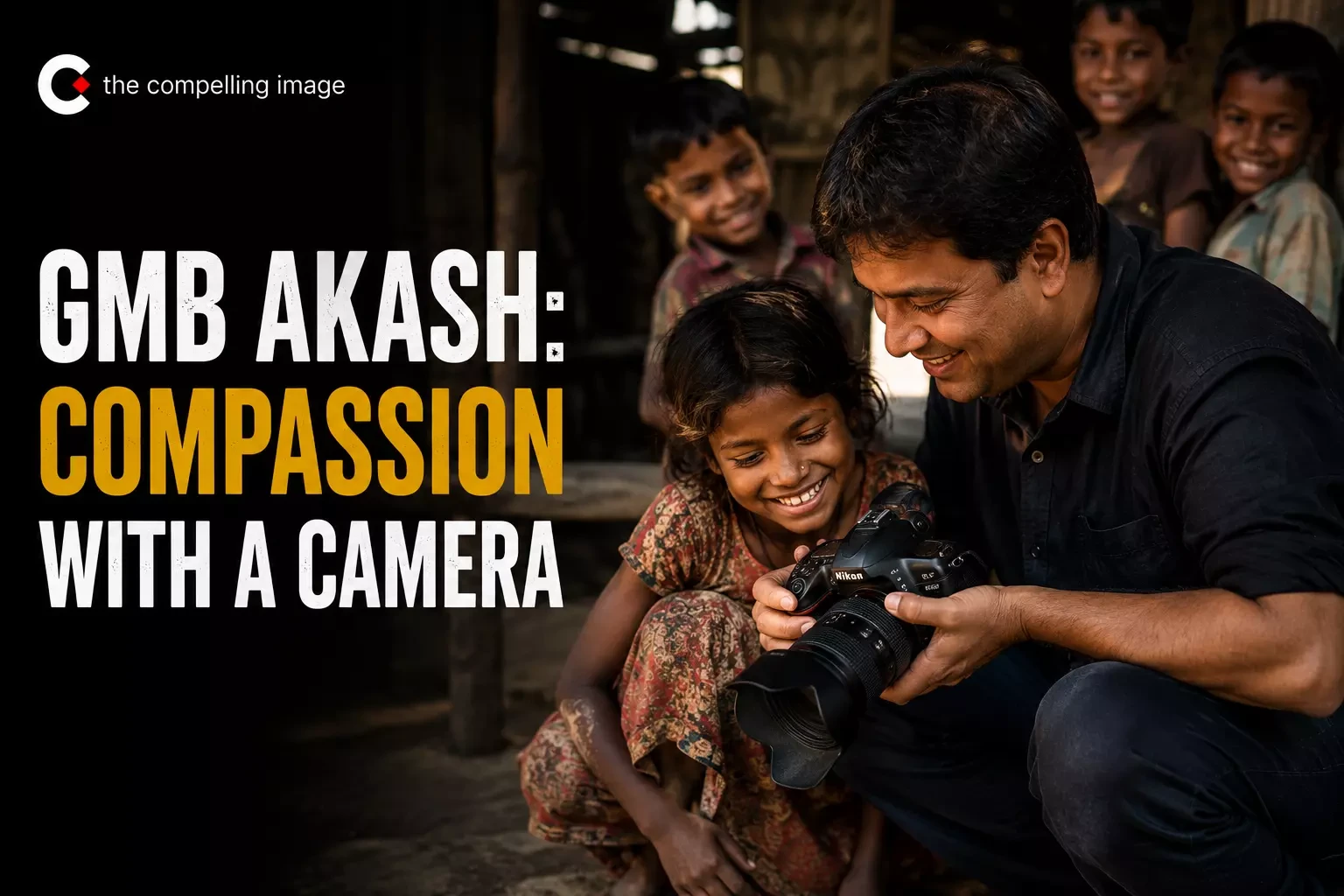
GMB Akash is the second kind. The Bangladeshi photographer has spent nearly three decades moving through the margins of society — train platforms, factory floors, riverbanks, slums — finding people whose lives rarely appear in print and making images that stay with you long after you've looked away.
When I first encountered his work, what struck me wasn't the technical quality — though the craft is exceptional — it was the intimacy. His subjects look directly into the lens without wariness. That doesn't happen by accident. It happens because the person behind the camera has spent time earning that trust.
How GMB Akash Found His Subject
Akash discovered photography in 1996. From the beginning, he understood something that takes many photographers years to learn: the camera is not the point. It's the access the camera gives you to people and stories that most of the world doesn't see.
He turned his attention to what he calls 'survivors' — people living at the edges of Bangladeshi and broader Asian society. Children working in factories. Families living on trains. Communities built on the most precarious margins imaginable. He photographed them not as victims but as people of enormous fortitude and dignity.
"These people are deprived of even the necessities of life," Akash has said, "yet they manage to spend each day with a smile on their faces. In the project, I follow the lives of those whose existence is based on serving others rather than themselves. They have no means to break the vicious circle, which is infinitely imposed upon them, such as a curse."
That combination — unflinching honesty about circumstances, real warmth toward the people in those circumstances — is what makes the work so powerful.
The Work and What It Has Earned
Over the course of his career, Akash's photographs have appeared in more than 45 major international publications. He has received sixty prestigious awards from photography organizations around the world.
He has been clear about what those awards mean to him — and what they don't: "I never do photography to gain any award. My first rule is to capture what my eyes and heart catch. Taking photos to feed passion may be the most important invisible factor to win competitions."
This is worth sitting with. One of the most decorated documentary photographers working today is telling you that he doesn't think about recognition when he works. He thinks about the person in front of his lens. The awards, in his account, are a by-product of that singular focus.
What His Approach to Photography Actually Looks Like
Documentary photography at this level requires physical commitment that most people underestimate. Akash has used weeks living alongside the communities he photographs. He rides the trains. He sits in the factories. He returns, repeatedly, to the same faces.
This is not the parachute approach to documentary work — fly in, take the obvious pictures, fly out. It's sustained, patient, deeply intimate engagement with a subject. The access his subjects give him is a direct reflection of the time he invests.
The technical choices in his images support this approach. He works close. He uses available light almost exclusively. His street photography has the quality of someone who has learned to become invisible — or rather, to become trusted — so that people behave naturally in front of the camera.
On Teaching: What Akash Believes Students Need
Akash teaches the Street Photography: Classic and Creative course at The Compelling Image. His approach to instruction carries the same philosophy as his personal work.
"I believe zeal and unconditional love for any particular topic is the best choice for making or deciding subject/projects for students. A shot cannot be perfect unless one gives their all possible devotion to the topic and, if not, it will be lifeless. We should not unthinkingly follow someone, but should make versatile attempts. Also, mostly we should work to feed a photographic soul rather than only work for another medium or persons."
On the specific value of street photography for developing photographers:
"Street photography is a very interesting subject. Taking spontaneous photos can help students learn what is interesting and what is not. Later they can cover stories based upon their experience, and trust me, they will be amazed by their ability to choose stories."
What he's describing is the development of editorial judgment — the ability to look at a scene and know, instinctively, whether there's a photograph worth making. That judgment can't be taught from a textbook. It comes from shooting continuously, from making thousands of frames and comparing what you intended with what you actually got.
What Photographers Can Take From His Work
Whether you're drawn to documentary work or not, there are specific things in Akash's approach worth internalizing.
Presence before the camera. He is fully present with his subjects before he ever lifts the camera. The image is the record of that relationship, not the substitute for it.
Sustained subject matter. He has photographed the same communities for years. This depth of engagement produces a kind of knowledge about your subject that shows in the work.
Physical commitment. Good documentary photographs often require being somewhere difficult, for longer than is comfortable. Akash treats this as part of the work, not an inconvenience.
Purpose over aesthetics. His images are beautiful, but beauty is not the goal. The goal is to make someone who has never been to Bangladesh understand something true about a life being lived there. That clarity of purpose is what makes the images so strong. It's what three elements of a good photo always come back to: subject, light, and story working together.
GMB Akash at The Compelling Image
The Compelling Image is honored to have GMB Akash as one of its instructors. The Street Photography: Classic and Creative course expresses both the technical discipline and the human commitment that defines his personal work.
For photographers who want to understand what it takes to become a professional photographer with a serious body of work, Akash's career offers a clear model: find what matters to you, go where it lives, stay longer than feels comfortable, and let the images grow out of real engagement rather than technical performance.
His approach also connects to a larger truth about what makes photography meaningful over time. Strong photography projects — the kind that build into a coherent body of work — almost always begin with a subject the photographer cares about deeply enough to return to again and again.
Akash's work is an indication of what photography can actually do when it's in the hands of someone willing to use it as an instrument of witness rather than just a way of making attractive images. The camera is the tool. The compassion is the work.